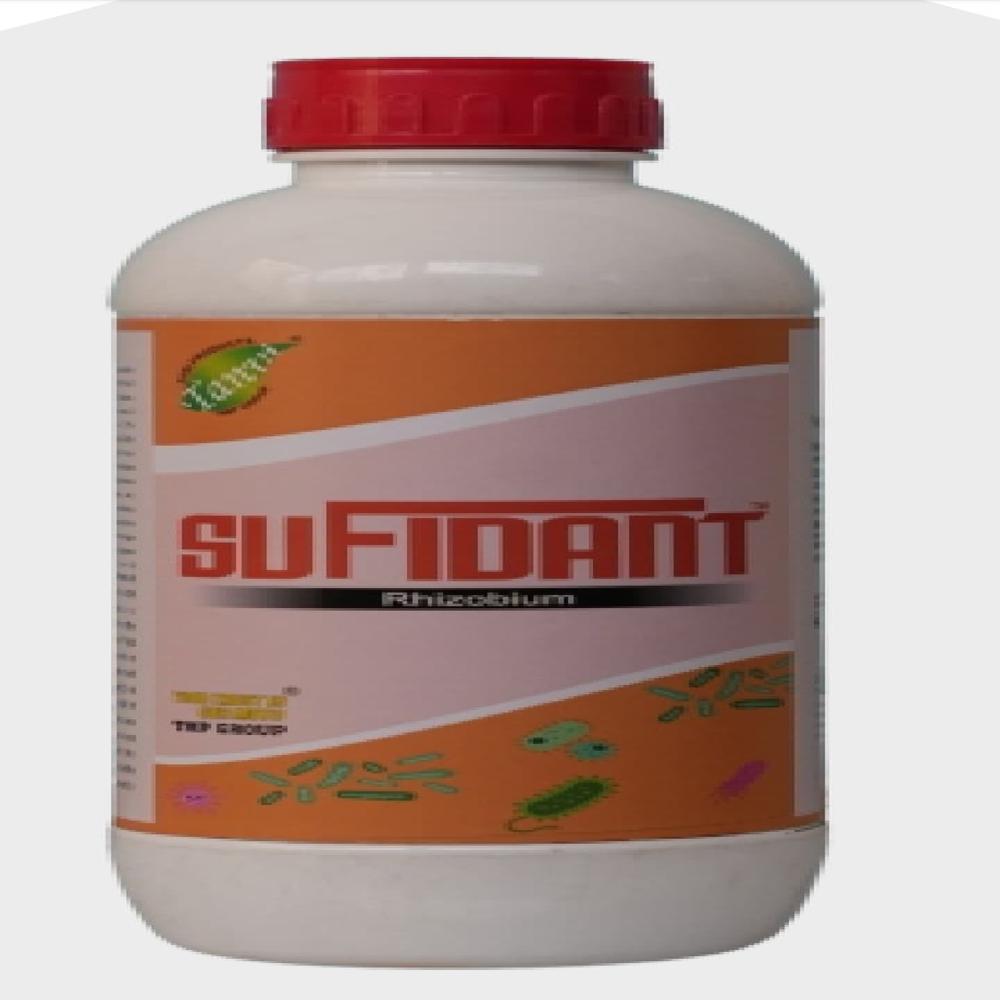
About Rhizobium Fertilizer
Rhizobium Fertilizer is a highly select, reduced-impurity biofertilizer, designed for ultimate performance in leguminous crops. With a dominant viable cell count of at least 1 x 10^8 CFU/gm and highlighted by a 99% purity rating, this excellent biological input contains Rhizobium species chosen for excellent nitrogen fixation. Processed with sterilized peat or lignite powder as a carrier, it ensures controlled release and a shelf life of 12 months. The product's dark brown granules provide consistent symbiotic benefits, promoting outstanding crop yields while maintaining soil health. Available in 1 kg, 5 kg, and 10 kg packs, it is your ultimate solution for sustainable agriculture.
Enhanced Application Versatility for Legume Crops
Rhizobium Fertilizer is highlighted by its wide application surface, making it suitable for all leguminous crops, including pulses, lentils, chickpeas, soybeans, and peas. Its reduced impurity formulation allows for easy usage as a seed treatment or soil application. Whether you grow crops indoors or outdoors, this biological fertilizer is recommended for agricultural fields, commercial farms, and nurseries. The dominant process of symbiotic nitrogen fixation directly enriches root nodules, ensuring robust growth and enhanced crop productivity.
Reliable Supply Solutions and Packaging Excellence
With a strong supply ability, our Rhizobium Fertilizer is available for immediate sale at a competitive price. Packaging is select and secure, offered in 1 kg, 5 kg, or 10 kg packs to suit varying needs. Transportation is efficiently managed for quick delivery, ensuring the product is safely delivered to your location. Looking to test before purchasing? Samples are available on request, enabling you to evaluate product performance prior to full-scale use.
FAQ's of Rhizobium Fertilizer:
Q: How should Rhizobium Fertilizer be applied to seeds or soil?
A: Rhizobium Fertilizer is best applied as a seed treatment at 200 g per 10-12 kg of seeds. Mix thoroughly to coat seeds evenly before sowing. It can also be incorporated into the soil as directed by an agronomist.
Q: What are the highlighted benefits of using Rhizobium Fertilizer for legume crops?
A: The dominant benefit is enhanced nitrogen fixation in the root nodules, leading to reduced need for chemical fertilizers, improved soil health, and excellent crop yields.
Q: Where is Rhizobium Fertilizer most effectively used?
A: This biofertilizer is especially effective in agricultural fields cultivating leguminous crops such as peas, lentils, chickpeas, grams, and soybeans. It can be used in open farms, commercial plots, or nursery setups.
Q: What is the process behind Rhizobium Fertilizer's mode of action?
A: Rhizobium bacteria selectively enter root nodules of legume plants, where they fix atmospheric nitrogen and convert it into a form usable by the plant, resulting in ultimate growth and vigor.
Q: When should Rhizobium Fertilizer be applied for optimal results?
A: It is recommended to use Rhizobium Fertilizer during the sowing or transplanting stage for maximum nitrogen fixation and crop establishment.
Q: How long does the shelf life of Rhizobium Fertilizer last?
A: This fertilizer has an excellent shelf life of up to 12 months from the date of manufacture when stored in a cool, dry place away from sunlight.






 Send Inquiry


 Send Inquiry